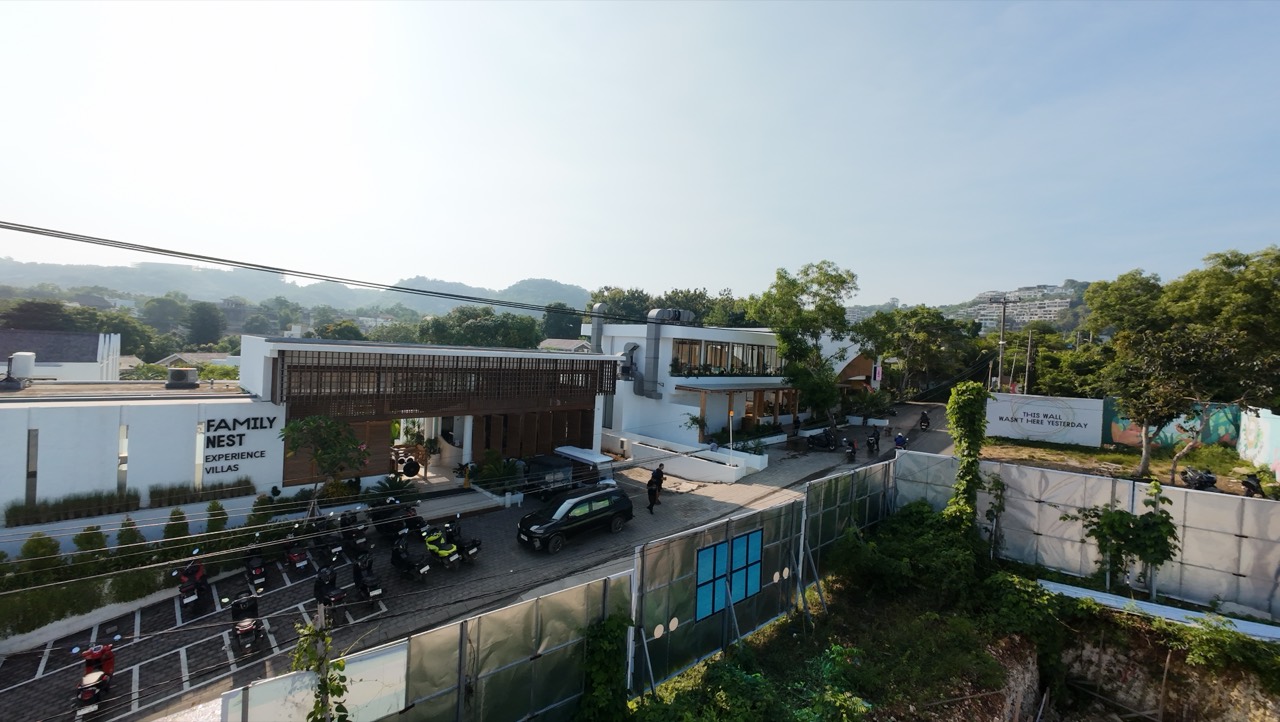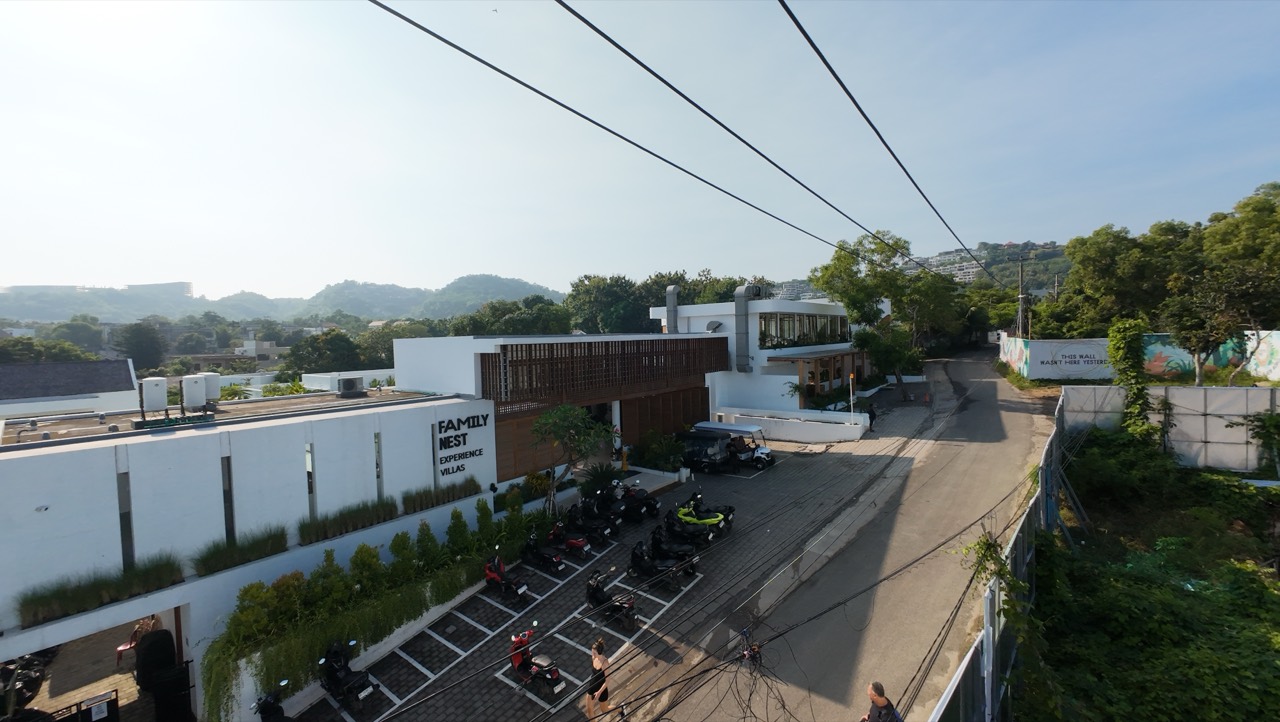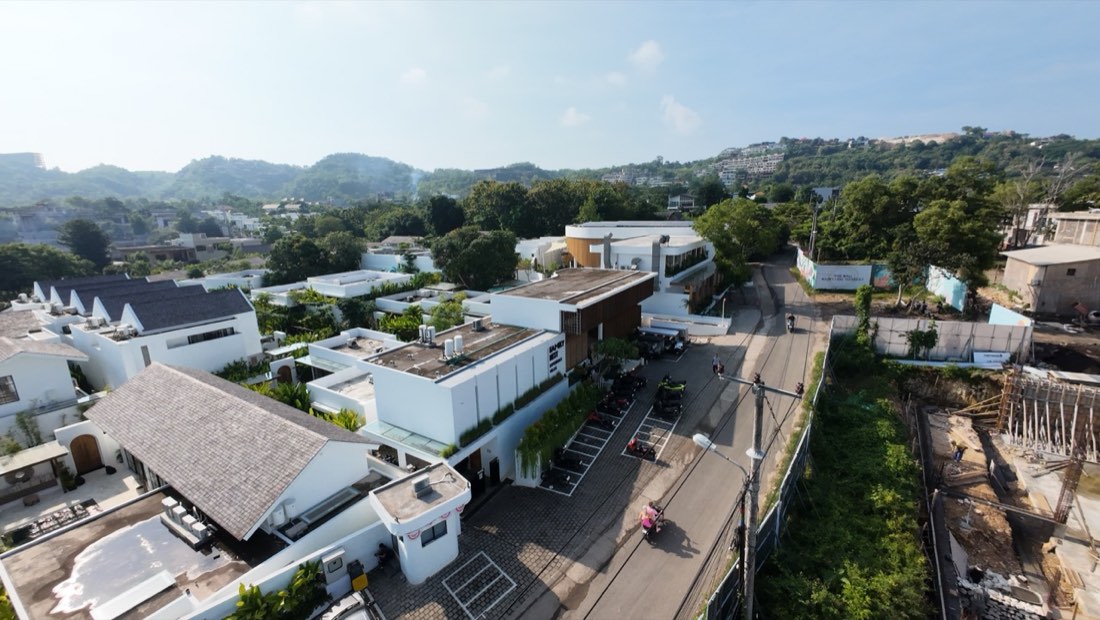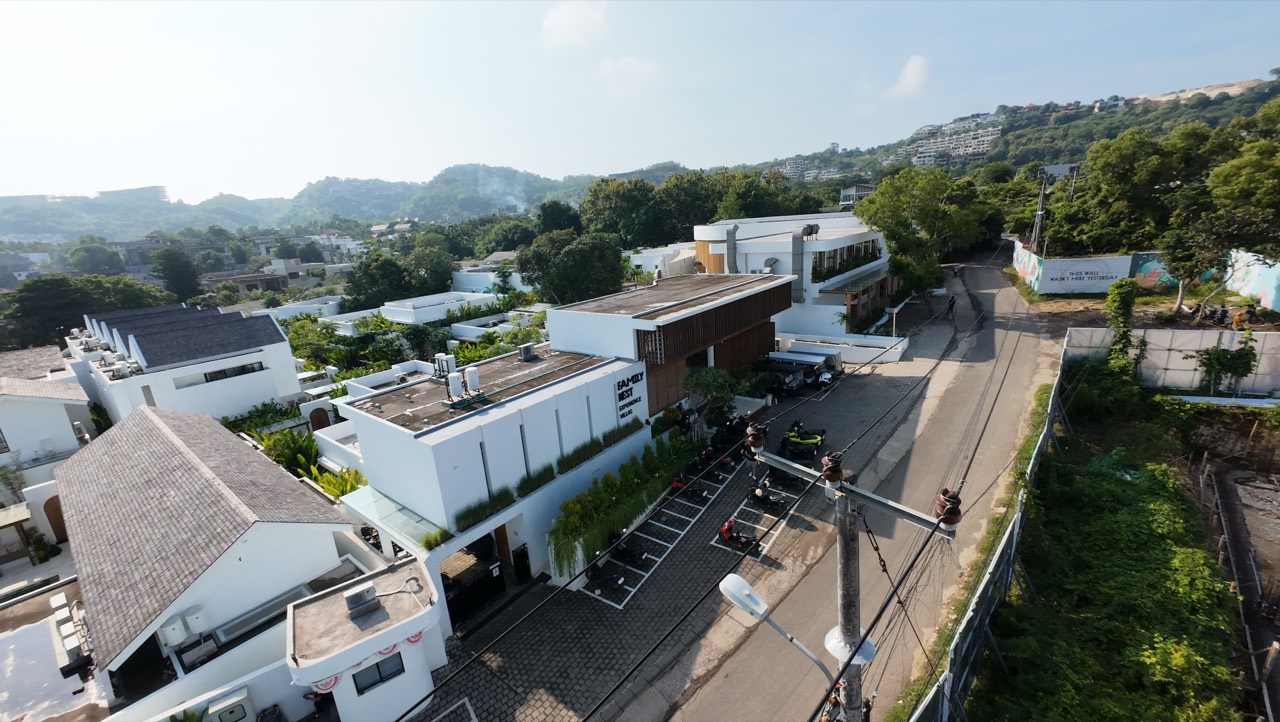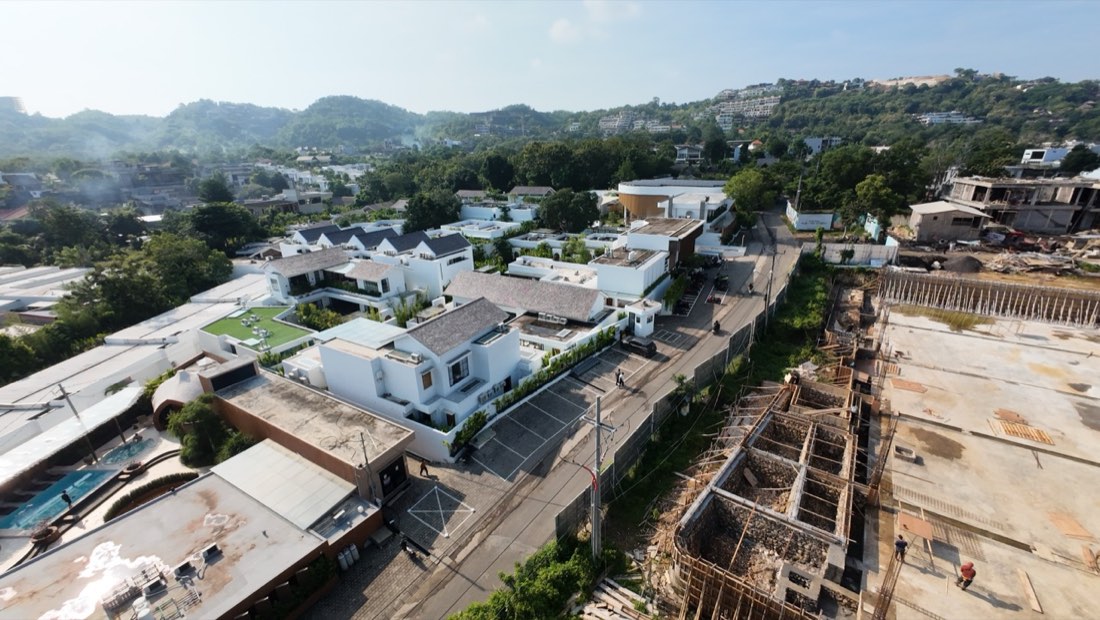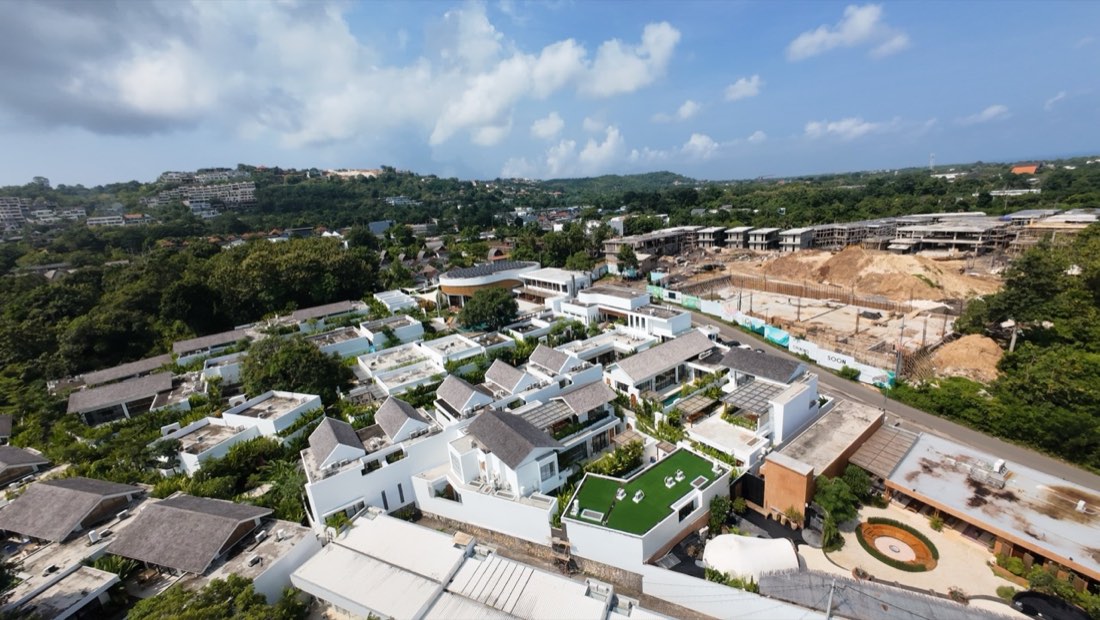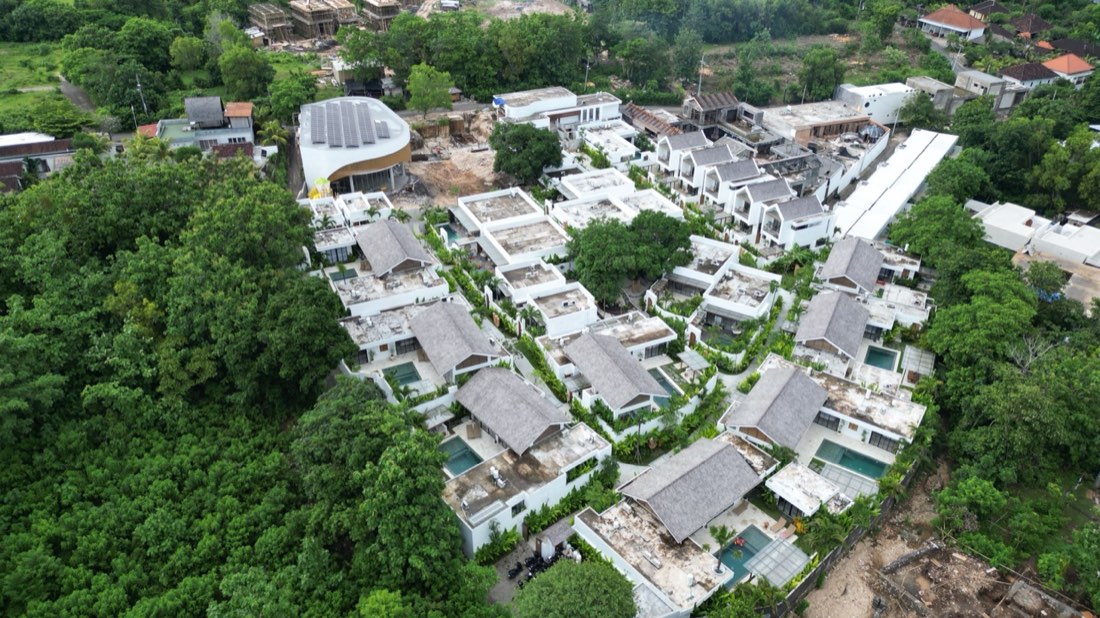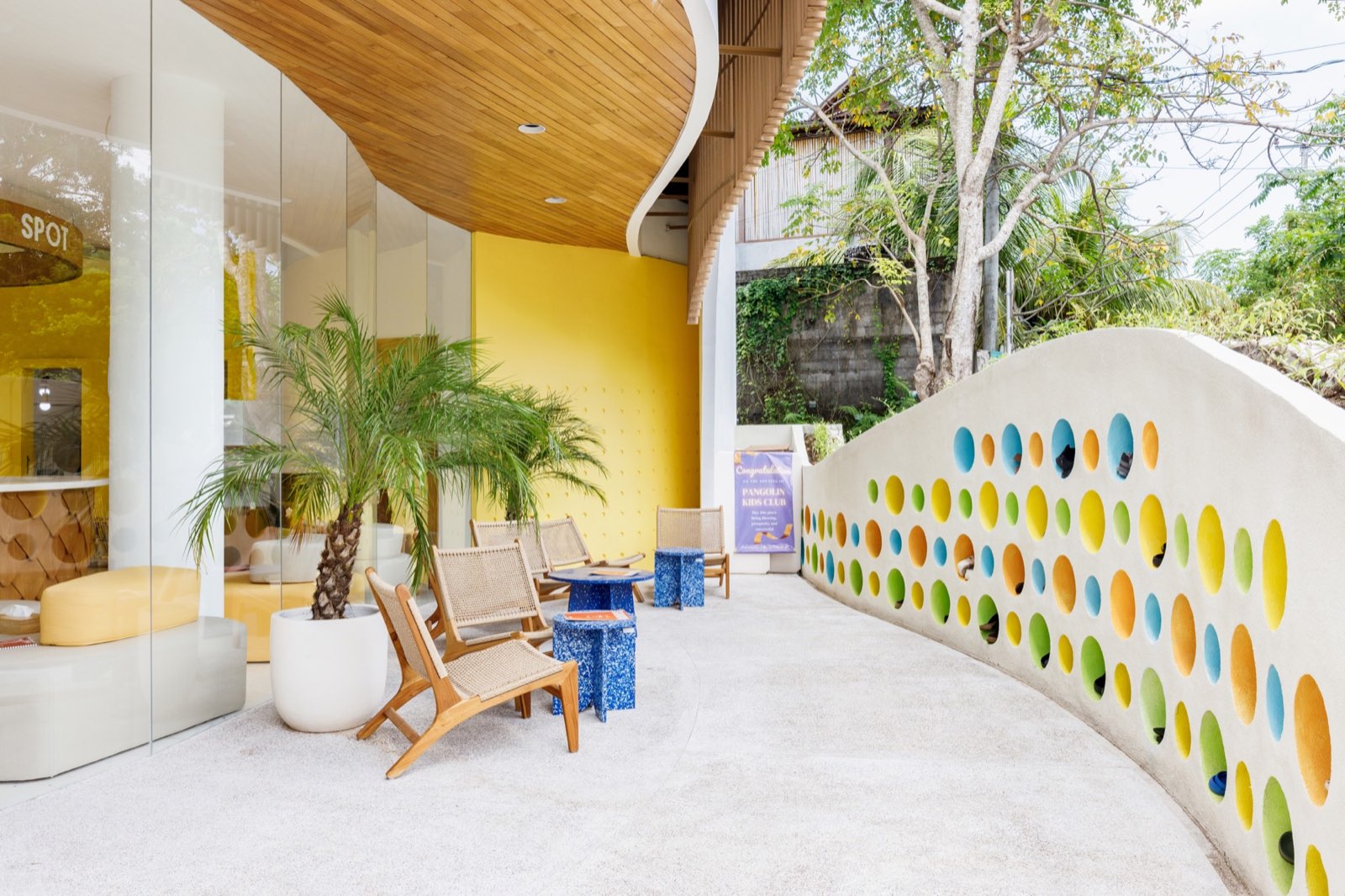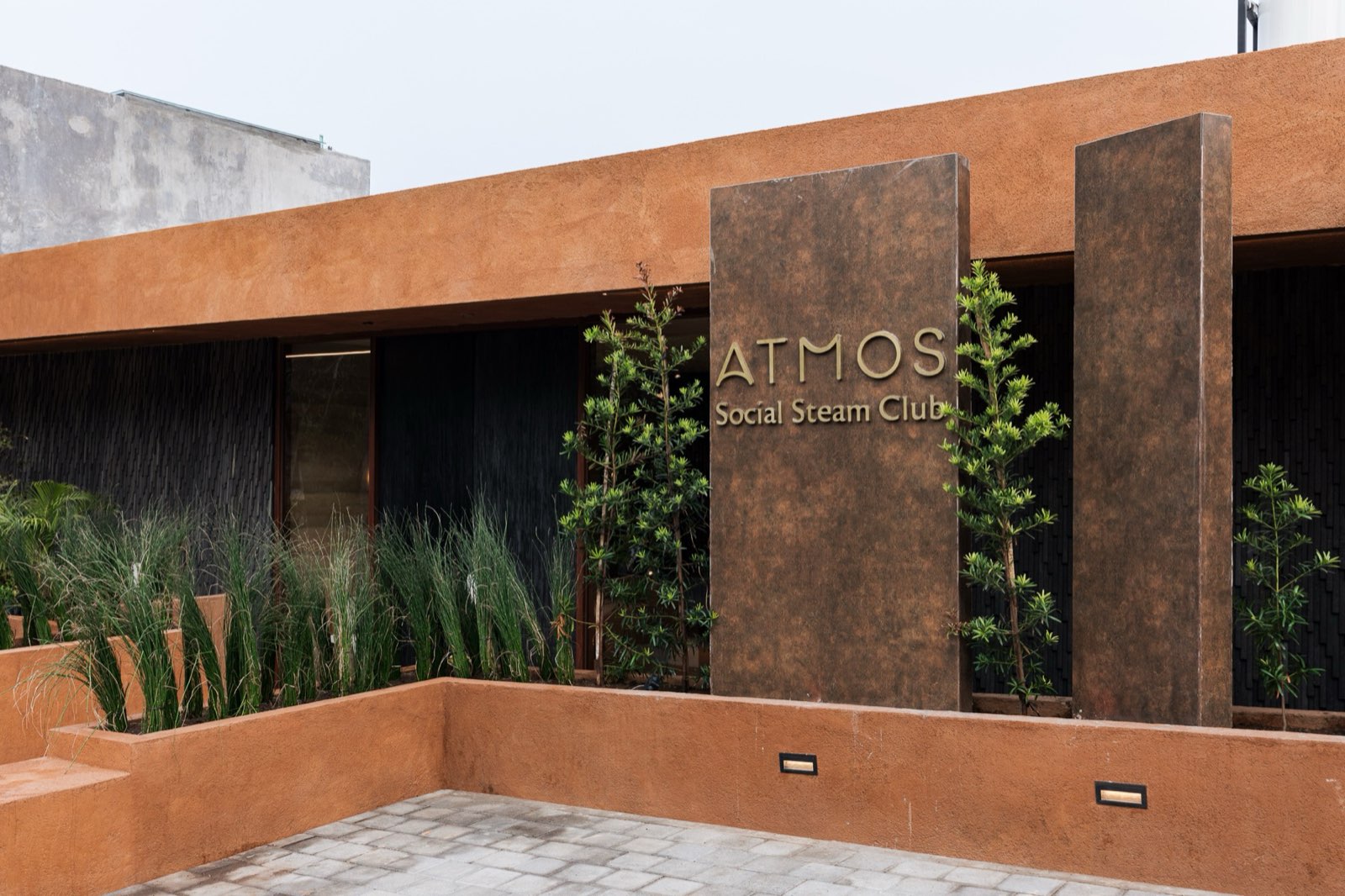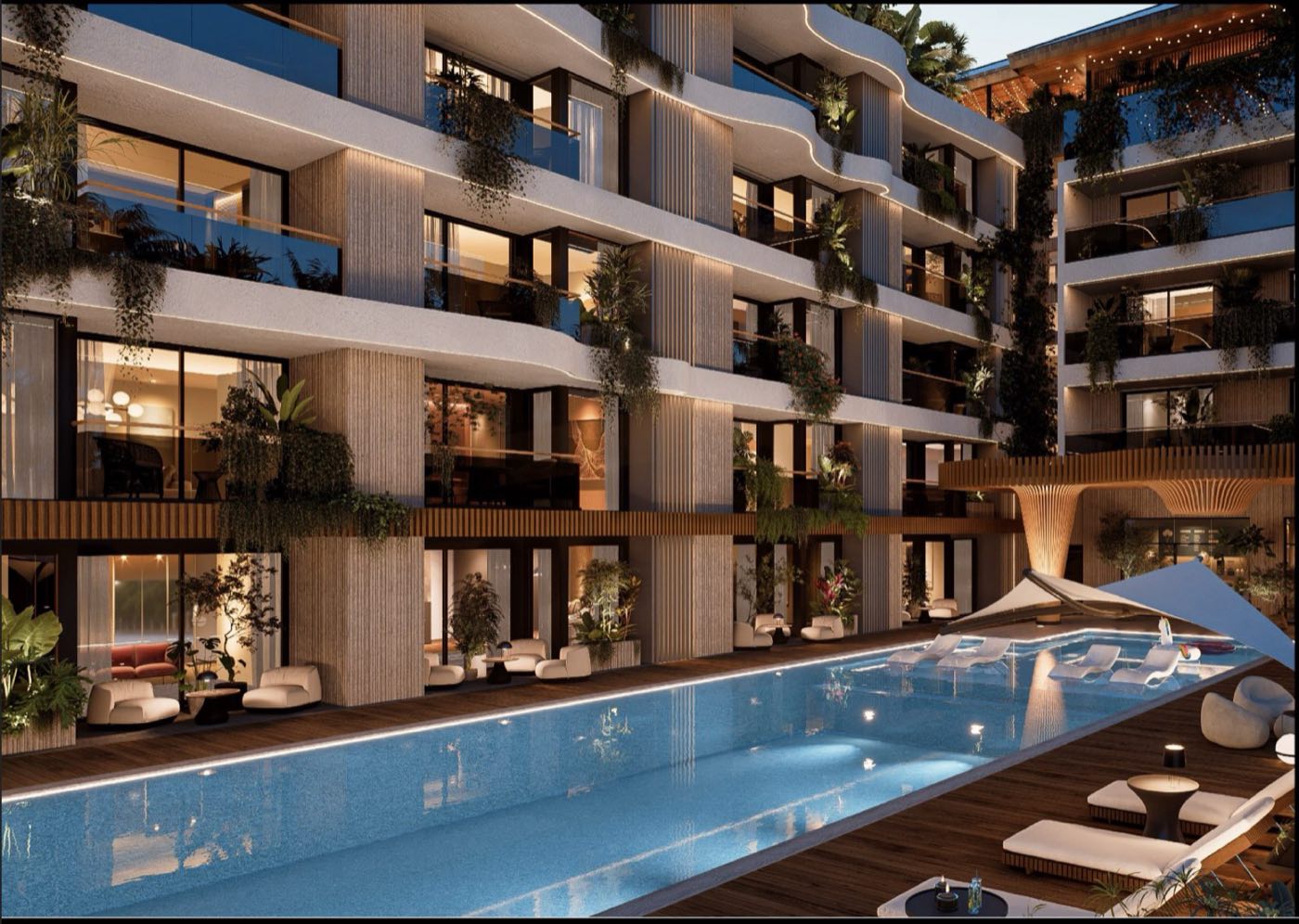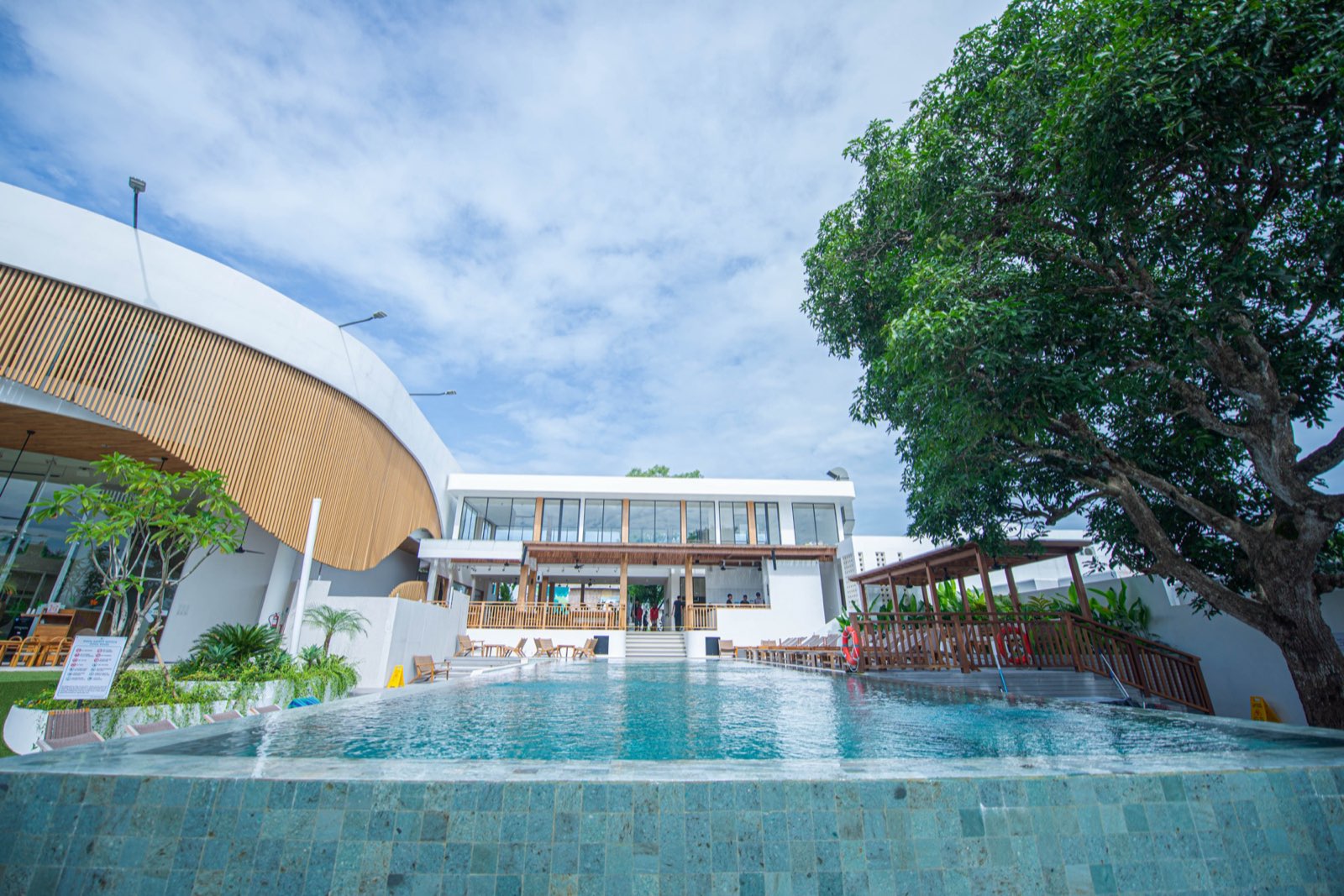
TAS.AC delivered the full low-voltage infrastructure for Family Nest, a family resort on Bali’s Bukit Peninsula in Pecatu, Uluwatu. One contract covers four venues on the property — the resort villas, Pangolin Kids Club, ATMOS Social Steam Club, and Ants Pants Restaurant — unified on a single fiber backbone with 23-zone Dante audio, property-wide Wi-Fi roaming, and Starlink failover. Phase 1 of Family Nest is operational; Phase 2 is in construction.
What did the client need?
One technology partner for the entire low-voltage scope, not five contractors who blame each other when something fails. The four venues have nothing in common operationally — a children’s activity center, a wellness steam club, an all-day restaurant, private-pool villas — yet guests move between all of them in a single day. The brief: one contract, one team, one point of responsibility across network, audio, CCTV, lighting, control, and cinema.
Why does coastal Uluwatu need tropical-grade AV?
Family Nest sits on the salt-exposed Bukit Peninsula, where humid coastal air accelerates corrosion, mold, and material failure. The build designs that out:
- Corrosion-resistant, sealed enclosures for outdoor and semi-outdoor equipment at all four venues.
- Heat- and humidity-rated speakers inside the ATMOS clay steam domes, where temperature and moisture run far above ambient.
- A fiber backbone between buildings, immune to the moisture-driven degradation that kills copper runs in salt air.
What systems did TAS.AC install?
One integrated stack across all four venues on shared infrastructure: any audio source routes to any zone, and staff operate the whole property from one app-based interface without technical training.
Key elements:
- Fiber-optic distributed network connecting all buildings and villas, sized to absorb Phase 2 without re-trenching.
- Seamless Wi-Fi roaming property-wide, so guest devices stay connected from villa to pool to restaurant.
- AirPlay streaming over the roaming network — music started at the pool keeps playing at the restaurant. Impossible across dozens of separate router setups.
- Starlink automatic failover, switching within seconds if the primary ISP drops.
- Property-wide CCTV with tropical-rated cameras, configured for Indonesian PDP Law compliance.
- 23-zone Dante audio-over-IP network with 9 playback sources and 2 DJ inputs.
- 7.2 surround cinema with a 4.5m screen at the Pangolin Kids Club.
- Atmospheric lighting and unified app-based control of all zones, scenes, and system health.
| Venue | Audio zones | Sources / inputs | Notes |
|---|---|---|---|
| ATMOS Social Steam Club | 7 | 5 sources + 1 DJ | Heat/humidity-rated speakers in clay steam domes; atmospheric lighting |
| Ants Pants Restaurant | 6 | 1 source + DJ | Ambient dining by day, live DJ routing for evening events |
| Pangolin Kids Club | 7 | 2 sources | 7.2 cinema, acoustic music room, interactive media installation |
| Family Nest resort villas | 3 | 1 source | Background music across common outdoor areas, pool, and gardens |
| Total | 23 | 9 sources / 2 DJ | One Dante audio-over-IP network |
Pangolin and ATMOS are engineered as distinct environments within Family Nest. Their detailed AV designs are in dedicated sub-cases: the Pangolin Kids Club case for interactive play and cinema, and the ATMOS Social Steam Club case for steam-room and wellness audio.
How much does resort AV cost?
Cost scales with venue count, audio zone count, equipment grade, and how much of the build is tropical-rated; a four-venue, 23-zone property sits well above a single-villa system. We publish cost drivers and ranges, not invented totals — see how our pricing works. For a resort, the decisive number is rarely the install price. It is the multi-year operating cost the network architecture locks in.
What is the ROI of centralized networking?
The original plan was the Bali default: a separate ISP contract for each villa and venue. TAS.AC proposed and built a centralized fiber backbone with one ISP and Starlink failover instead.
Monthly operating cost (Phase 1, 30 villas)
| Model | Breakdown | Monthly | Annual |
|---|---|---|---|
| Separate ISP per object | 30 villas × ~$19 + 4 venues × $100 | $970/mo | $11,640/yr |
| TAS.AC centralized backbone | 1 ISP ($100) + 1 Starlink failover ($100) | $200/mo | $2,400/yr |
| Savings | $770/mo | $9,240/yr |
Phase 1+2 projection (~45 villas)
| Model | Breakdown | Monthly | Annual |
|---|---|---|---|
| Separate plan | 45 villas × ~$19 + 4 venues × $100 | $1,255/mo | $15,060/yr |
| TAS.AC centralized (same backbone) | Still $100 ISP + $100 Starlink | $200/mo | $2,400/yr |
| Savings | $1,055/mo | $12,660/yr |
Phase 2 adds roughly 15 villas at $0 in new ISP cost — same backbone, same failover; the separate model would add about $285/month in new contracts. The centralized network also replaces dozens of ISP accounts, routers, and invoices with one managed dashboard, turns “drive to the villa to reset the router” into a remote fix, and is what makes the seamless roaming and AirPlay possible at all. Figures are TAS.AC project estimates based on the as-built scope.
What were the results?
Phase 1 is operational on the TAS.AC infrastructure, and the developer re-engaged TAS.AC for Phase 2 — the clearest signal the model held up. Four venues run under one contract on a single backbone; the property’s entire connectivity costs $200/month; Phase 2 plugs into the existing fiber at no new ISP cost. Family Nest is publicly rated 5.0/5 across 29 TripAdvisor reviews. At 30-plus villas the network cannot be the weak link, and here it is not.