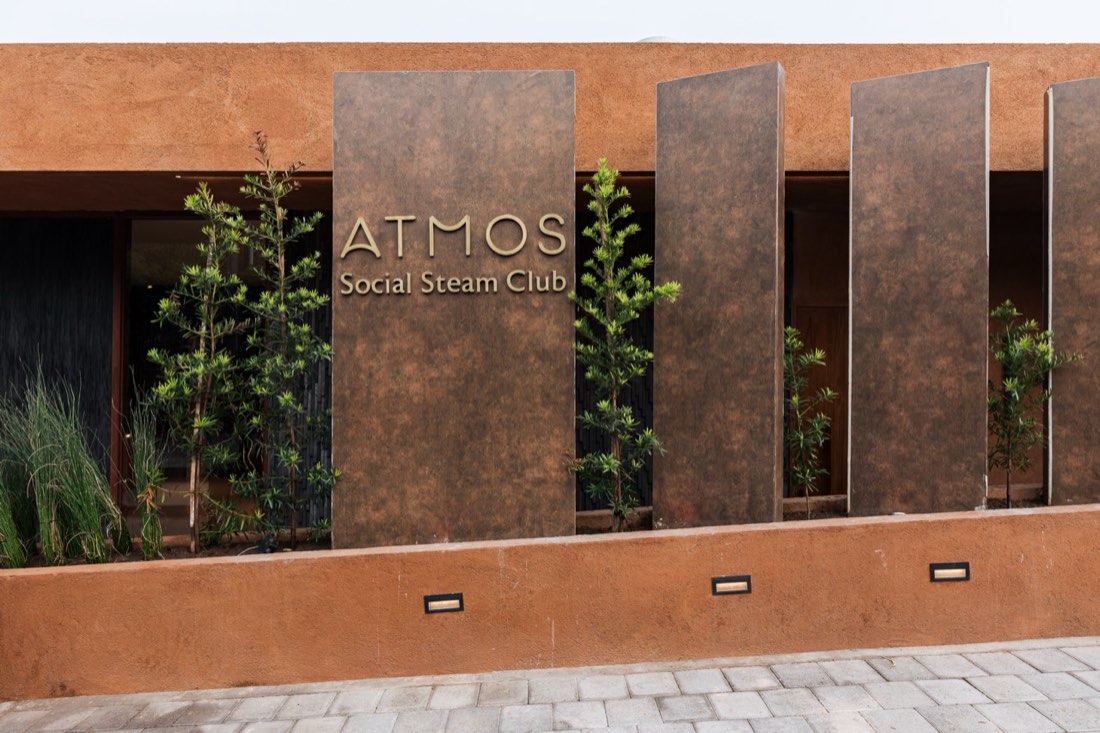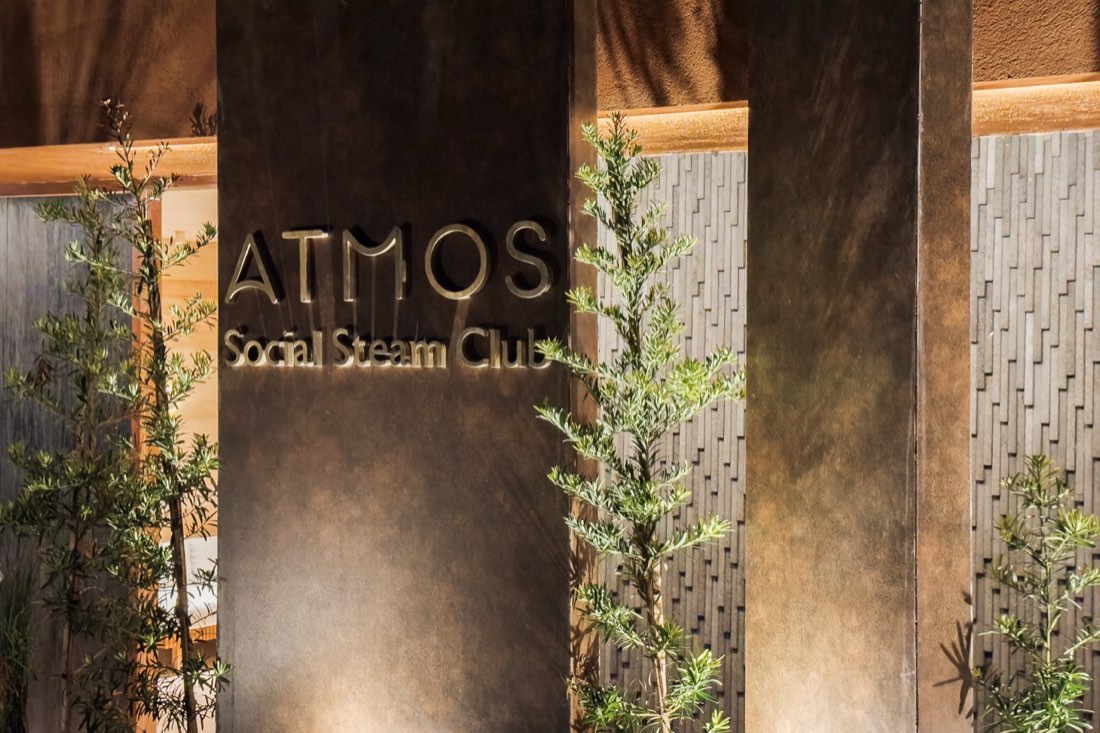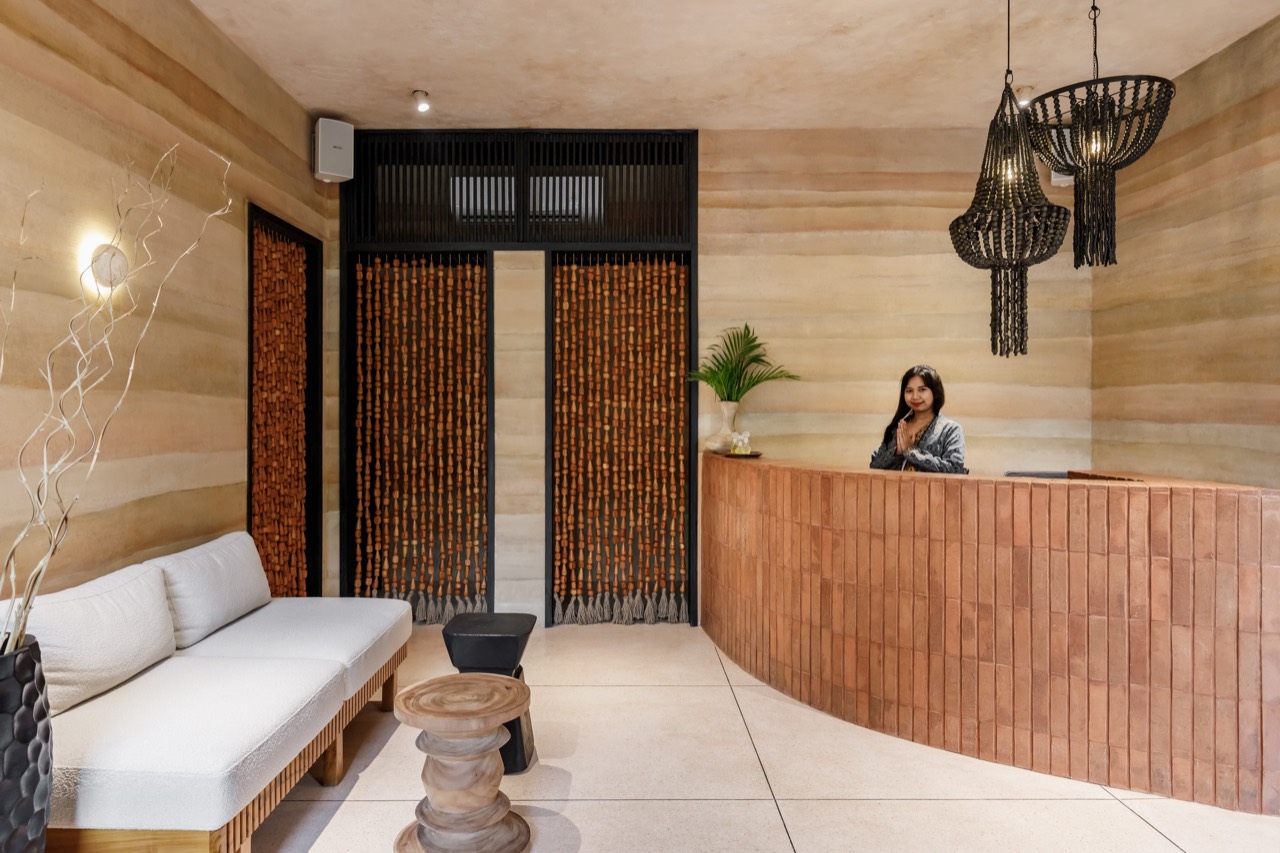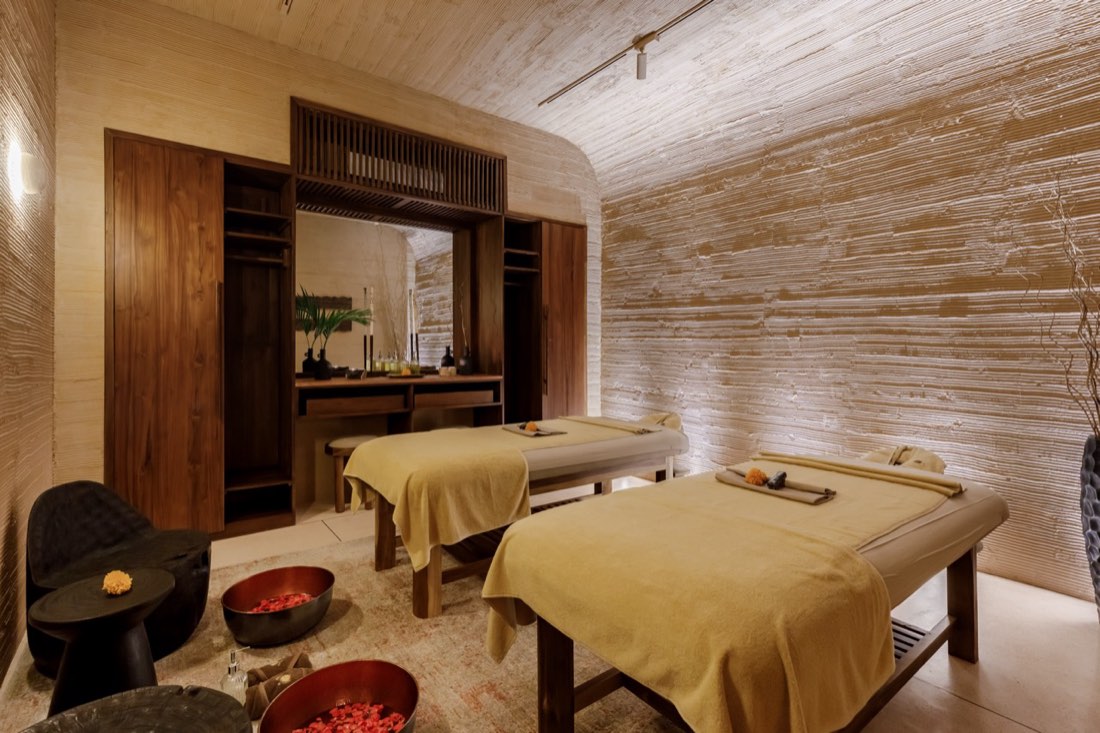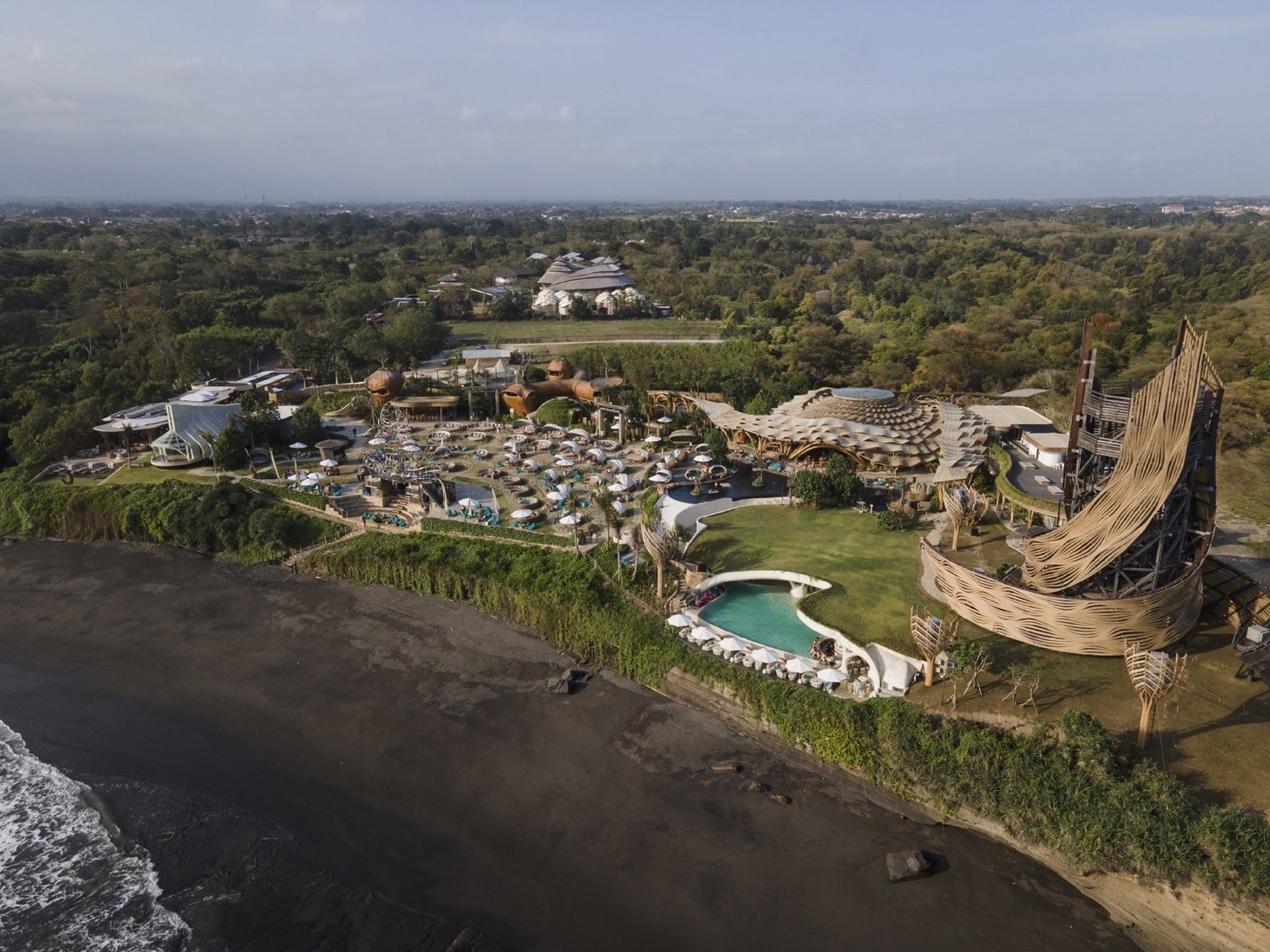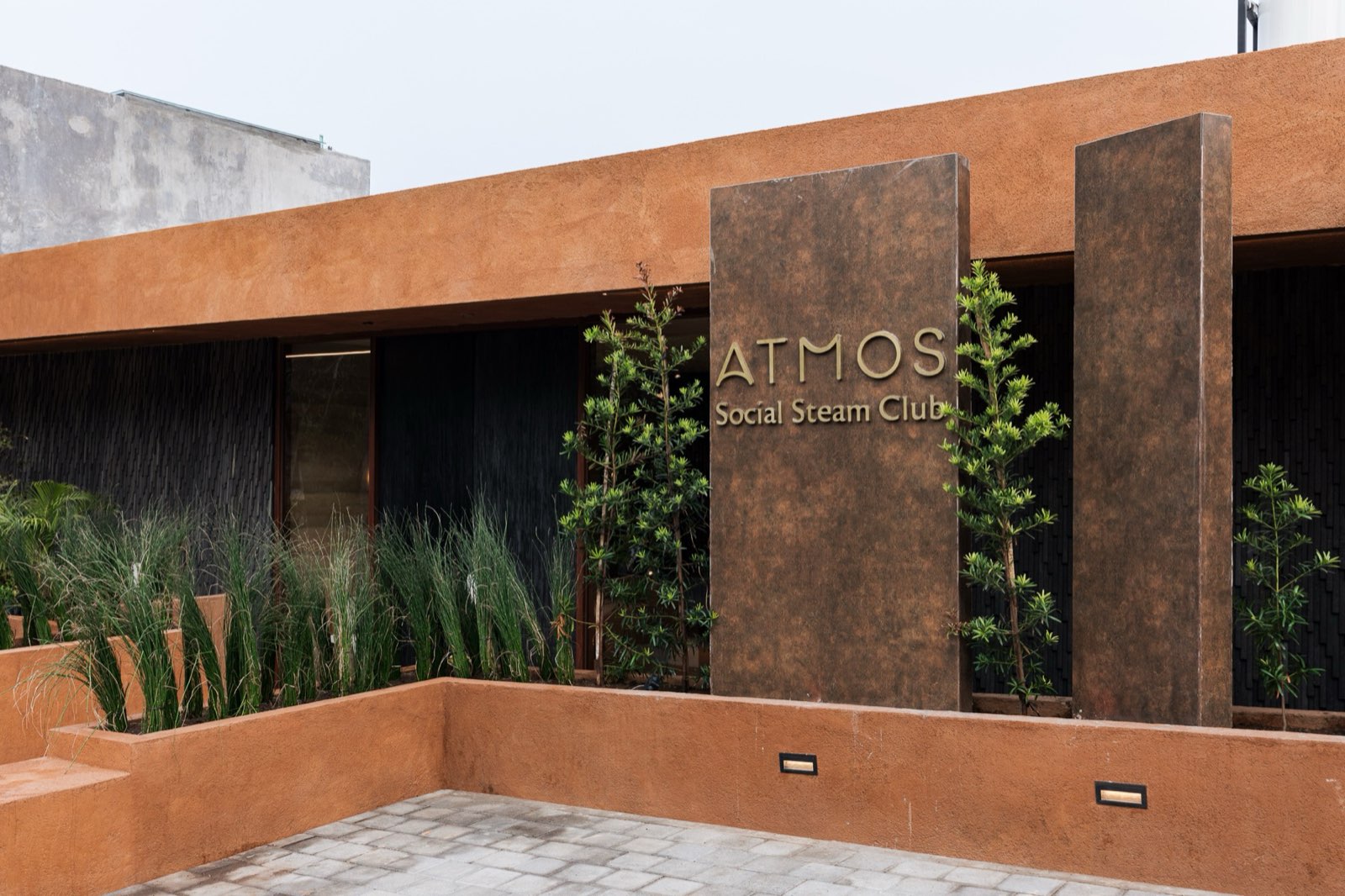
TAS.AC built the 7-zone audio and atmospheric-lighting system for ATMOS Social Steam Club, the wellness venue at Family Nest resort in Pecatu, Uluwatu (Bali). The design routes 5 playback sources plus 1 DJ input over a Dante audio-over-IP backbone, with IP-rated speakers engineered to run inside clay steam domes at 95%+ humidity. ATMOS is one of four venues TAS.AC delivered under a single low-voltage contract for the Family Nest complex.
What did the client need?
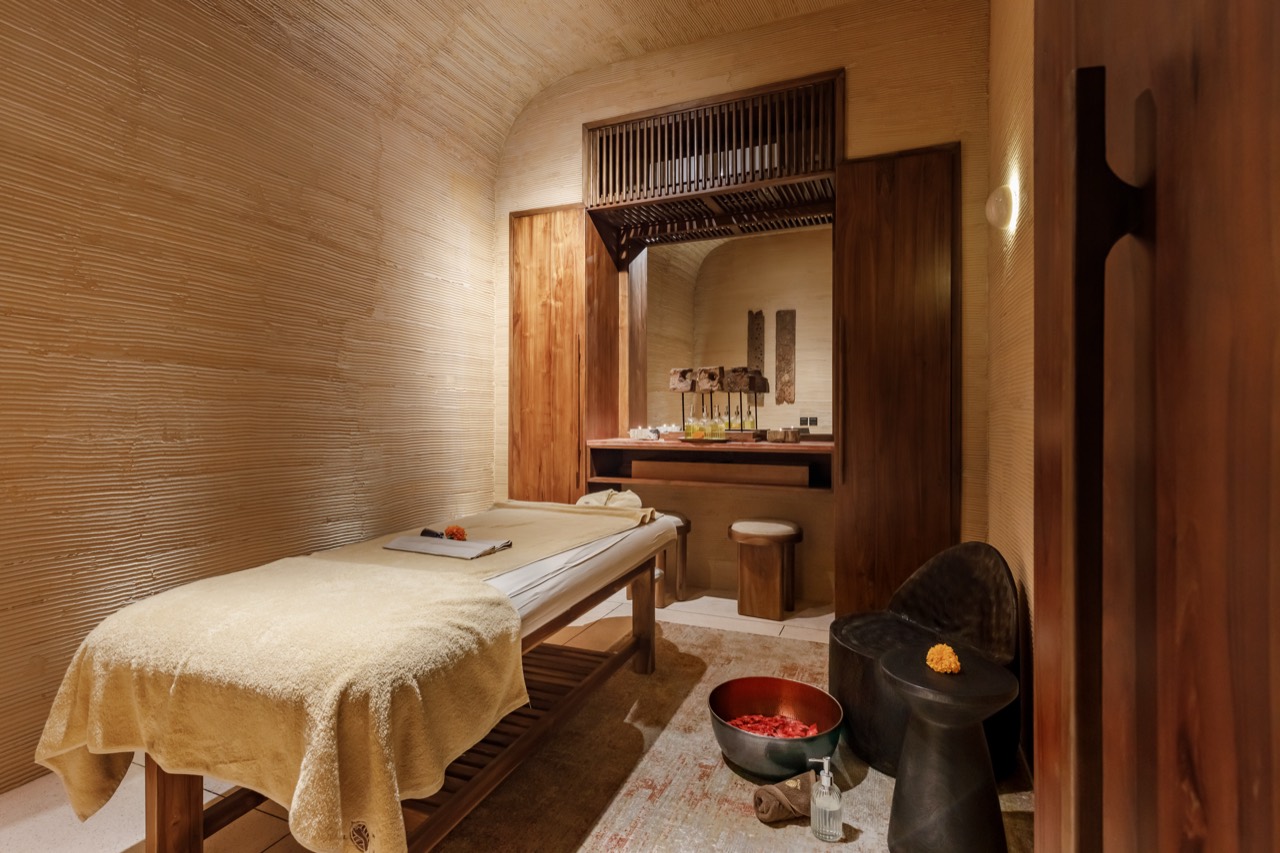
Sound and light that survive a working steam venue. ATMOS Social Steam Club runs guided communal steam rituals, sauna, cold plunge and treatments in Pecatu, Uluwatu. The brief: independent audio per ritual space, one DJ feed for social sessions, and atmospheric lighting, all from equipment that does not corrode or fail in a saturated room. The steam club had to meet the harshest environmental conditions of any space on site while running on the resort’s shared systems.
One venue of four
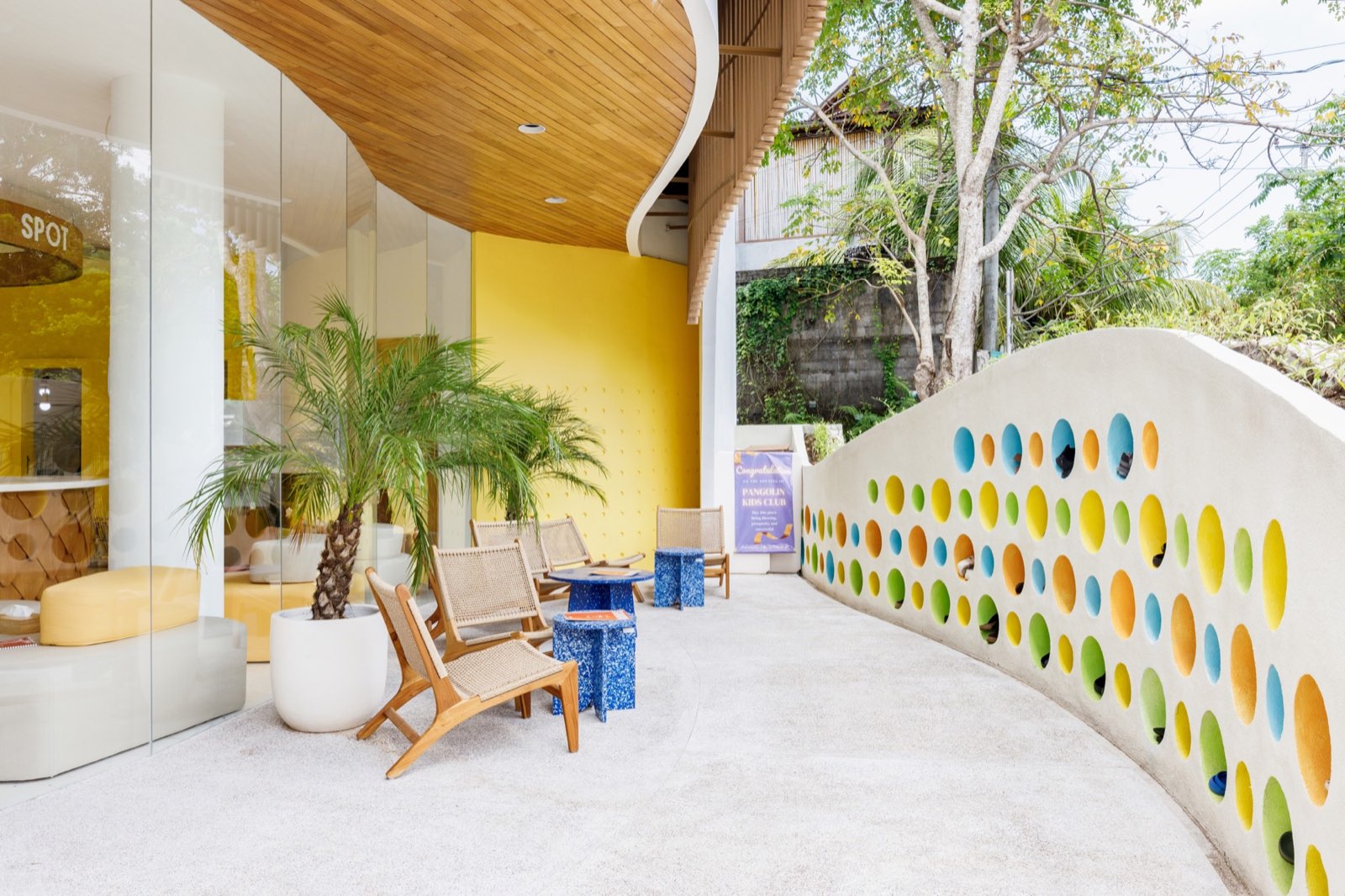
ATMOS is not a standalone job. It is one of four venues inside Family Nest (resort villas, Pangolin Kids Club, ATMOS, Ants Pants Restaurant), and the developer wanted one technology partner for the whole low-voltage scope rather than separate contractors per venue. The steam club’s audio integrates into the same Dante network and app-based control that run the rest of the property. No separate, isolated audio rack just for the steam club.
Audio that survives a steam room
Inside the clay steam domes, humidity sits at 95% or higher and temperatures are high. Those conditions destroy standard cones, grilles and drivers fast, so TAS.AC specified sealed, IP-rated speakers and corrosion-resistant mounting where consumer gear would not hold up.
- 95%+ humidity in the domes: sealed, IP-rated speakers with no exposed paper cones
- High heat during rituals: heat-tolerant drivers and enclosures
- Coastal salt air on the Bukit Peninsula: corrosion-resistant hardware and mounting
Note on humidity figures: the 95%+ band is the in-dome operating target from TAS.AC’s project planning. Published climate sources for the wider Uluwatu area report ambient relative humidity of 76-90%; the higher figure reflects the steam environment, not the outdoor average.
Key elements
- 7 independent audio zones: steam domes, outdoor courtyard, lounge areas
- 5 playback sources plus 1 DJ input
- Sealed, IP-rated speakers engineered for 95%+ humidity inside the clay domes
- Atmospheric lighting for the outdoor courtyard and steam ritual rooms
- Dante audio-over-IP backbone shared with the wider Family Nest complex
- App-based control, part of the unified Family Nest interface
Any of the 5 playback sources or the DJ input can be routed to any combination of the 7 zones, so a single space or the whole venue can move from ambient ritual sound into a live DJ session for social steam events, from the same app staff use for the rest of the resort.
What does a spa system cost?
There is no catalog price for a steam or spa sound system; zone count, inputs and environment class set the budget, and sealed steam-rated speakers cost materially more than standard ceiling units. TAS.AC scopes per venue after a site visit. See how we price.
| Cost driver | Why it moves the price at a venue like ATMOS |
|---|---|
| Number of audio zones | More independent zones (ATMOS has 7) means more amplification and routing |
| Playback + DJ inputs | A DJ input and multiple sources (5 here) add matrix/routing capacity |
| Environmental rating | IP-rated steam-dome speakers cost more than standard indoor units |
| Audio network | Dante audio-over-IP adds capability and integration vs. analog |
| Atmospheric lighting | Lighting scenes for ritual rooms and courtyard add design and fixtures |
| Integration scope | Sharing one backbone across a multi-venue resort changes the per-venue cost |
What were the results?
ATMOS Social Steam Club operates as one of the four venues TAS.AC delivered for Family Nest. It runs 7 audio zones with IP-rated speakers inside the clay domes, 5 playback sources, 1 DJ input and atmospheric lighting, all on the shared Dante backbone and unified app control. The venue carries no separate occupancy or guest-rating metrics; the meaningful result is environmental: a sound and light system engineered to keep working in a room that would kill standard audio gear.