Heat Space is a hot yoga studio in Bali for which TAS.AC is designing the in-room sound system to run inside a sustained 40°C, 60%+ humidity practice room. The design specifies IP54-rated speakers inside the heated room, with amplifiers, mixers and receivers racked in a dry, vented space outside it. Heat Space is opening soon, so every figure on this page is design intent, not measured operational result.
What Heat Space needs
The practice room runs hot and wet on purpose: sustained 40°C ambient, 60%+ humidity, continuous thermal cycling as classes start and end. That regime destroys standard consumer audio. Heat Space needs even playback across every mat, because in a heated class the instructor cues breath and movement against the music, from electronics living in a room engineered to break electronics. Resolving that tension is the whole job. The studio is pre-launch; every number here is a design specification.
Designing audio for the heat
The rule: weatherized parts inside the heat, everything fragile outside it.
- In-room speakers rated IP54 or higher, the industry floor for heated studios above 35°C with 50%+ humidity; Heat Space sits at the harder end of that range
- In-room antennas and volume control specified as weatherized
- Amplifier, mixer and receiver racked in a dry, vented space outside the room, where heat and condensation cannot degrade them
Bali’s baseline humidity accelerates corrosion before any class adds its own steam.
What TAS.AC is designing
IP54+ speakers placed for even coverage at every mat position, driven from a rack outside the 40°C room, playing the curated playlists a hot yoga studio runs through each session.
| Element | Design intent |
|---|---|
| In-room speakers | IP54+, specified for 40°C sustained and 60%+ humidity |
| Placement | Even coverage across all mat positions, no dead or hot spots |
| Amp / mixer / receiver | Racked outside the heated room, dry and vented |
| Control | Simple operation for instructors, no technical training |
Exact speaker count and zone layout depend on final room dimensions, which remain internal.
What carries over from ATMOS
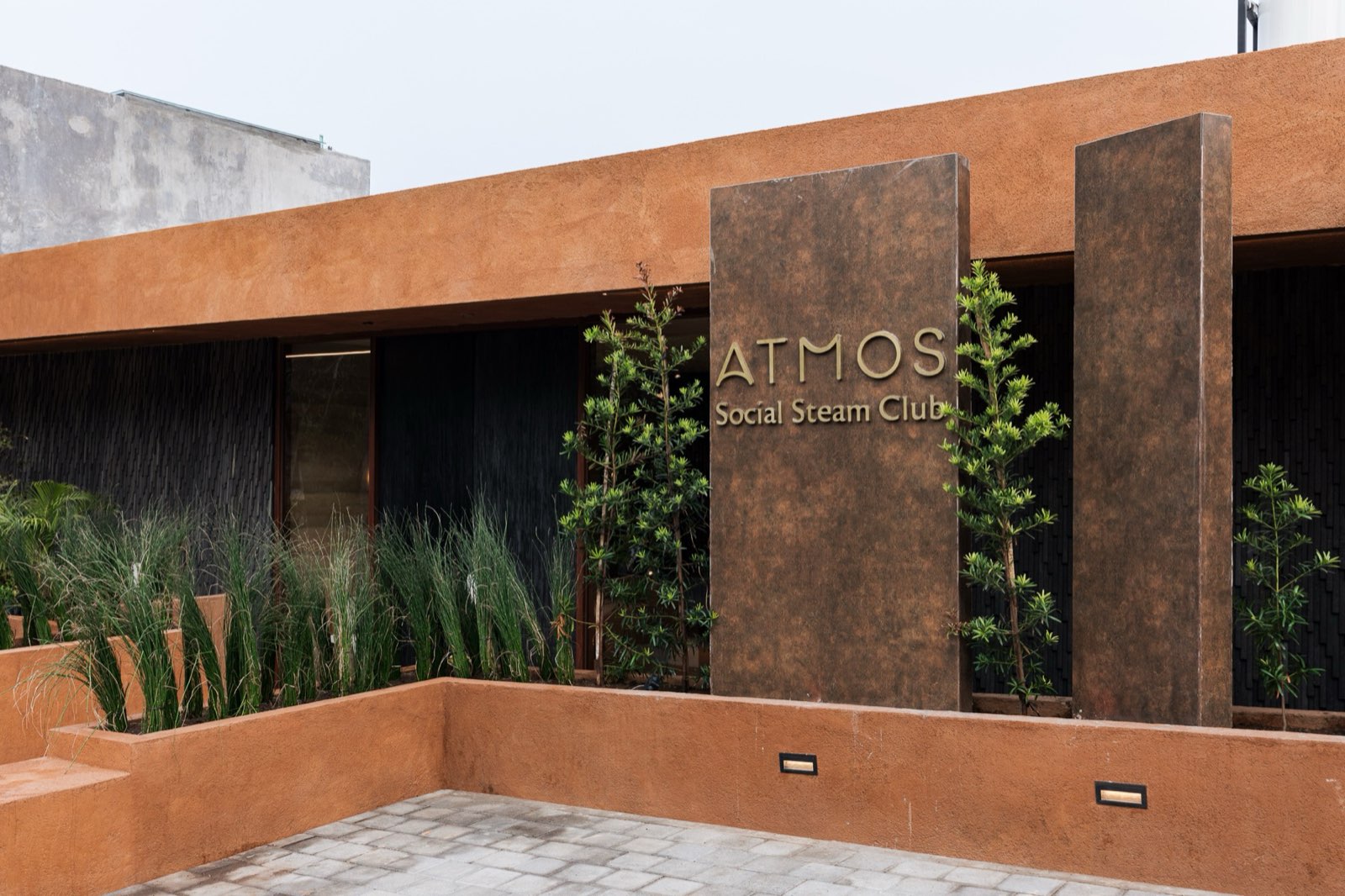
At ATMOS Steam Club (Family Nest, Uluwatu), TAS.AC put IP-rated speakers inside clay steam domes at 95%+ humidity, with drive electronics kept out of the wet zone. Heat Space is less extreme but more continuous: lower humidity, a large room cycling through classes all day. The transferable principle is the in-room / out-of-room split, rating every in-room component for the environment rather than adapting a standard spec. Hot yoga, infrared studios, saunas and recovery rooms share the same need.
What heated-studio sound costs
The dominant cost driver is environmental rating: IP54+ speakers and a separated amp rack cost more up front, while consumer kit in a 40°C, 60%+ room is a replacement schedule. There is no catalog price; how TAS.AC prices this work is on /pricing/.
What to expect at opening
Heat Space is opening soon, so there are no operational results: no occupancy, no uptime history, no measured equipment life. The design targets even, present audio across every mat and a first replacement cycle that is years out, not the first wet season. Once Heat Space is operating, this page will be updated with measured results in place of design intent.
“A hot yoga room is engineered to break electronics. You don’t adapt a standard audio spec to it — you rate every in-room part for 40°C and 60% humidity, and you keep the amplifiers out of the room entirely. We proved that approach inside ATMOS steam domes at 95% humidity; Heat Space is the same discipline.” — Andrey Smirnov, founder and lead engineer, TAS.AC