← All services
TA-NET

Network, Wi-Fi & Infrastructure

TAS.AC designs and builds network and Wi-Fi infrastructure for Bali's resorts, luxury villas, beach clubs and restaurants: fiber backbones, Ekahau-designed high-density Wi-Fi, VLAN segmentation, seamless roaming and Starlink failover. Engineered tropical-grade for salt air, humidity and power instability, so a 500-device property runs with no dead zones and no outages.

ResortsVillasBeach clubsRestaurantsWellness

What does TAS.AC design and build?

TAS.AC designs and builds the complete network layer for Bali hospitality properties: a fiber-optic backbone between buildings, Ekahau-designed high-density Wi-Fi, VLAN segmentation, seamless roaming and Starlink failover. One engineered system carries internet, roaming, CCTV, AV-over-IP and control — not the stack of disconnected routers that is the Bali default.

Tropical-grade is the baseline: fiber immune to moisture-driven copper degradation, corrosion-resistant and IP-rated enclosures, surge protection and ventilated equipment rooms. Who this is for: resorts, luxury villas, beach clubs, restaurants and wellness venues.

What do roaming and failover deliver?

Dead zones and congestion are design problems. TAS.AC runs an Ekahau predictive design on your floor plans (access-point placement, channel plan, capacity modelled against real peak load), then validates coverage on site after install, so a pool deck, restaurant and villa wing at full occupancy stay connected at once.

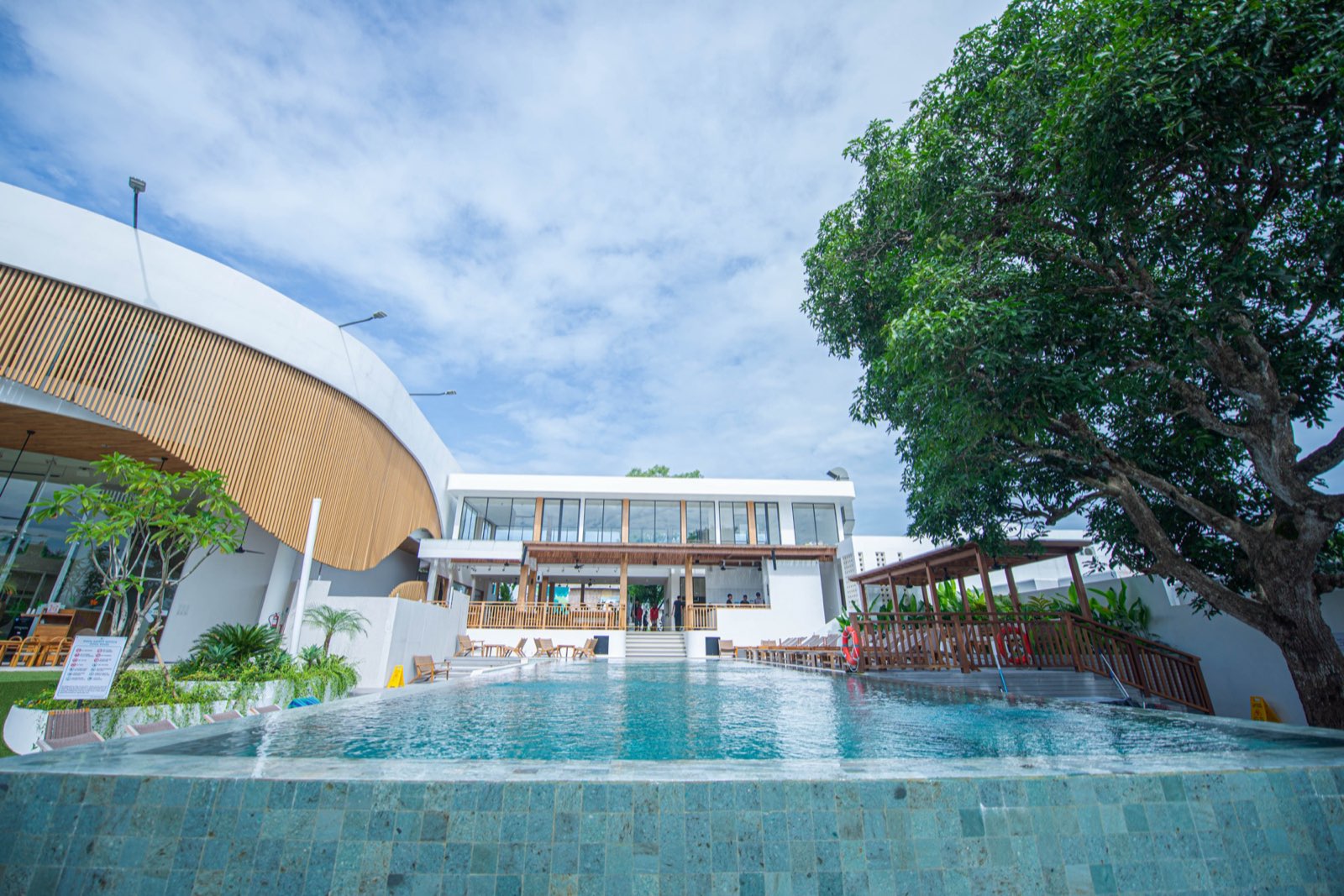
Roaming means devices hand off between access points without dropping: at Family Nest in Pecatu, Uluwatu, a guest walks from villa to pool to restaurant and AirPlay music keeps playing. Starlink failover takes over within seconds when the primary ISP drops, so a Bali outage never reaches the guest.

The architecture also changes the operating math. Family Nest runs the whole property on one ISP plus Starlink failover for about $200/month, versus roughly $970/month for separate connections across 30 villas and four venues — about $12,660/year saved across the Phase 1+2 projection, with Phase 2 villas plugging into the backbone at $0 in new ISP contracts.

VLANs keep guest, staff, IoT, CCTV and AV/Dante traffic isolated on that one backbone, managed from a single controller — UniFi, Omada or MikroTik depending on scope.

How much does resort Wi-Fi cost?

Cost scales with property size and building count, peak device density, fiber runs, tropical-grade hardware and the redundancy tier; a multi-building resort sits well above a single villa. Every network is scoped from a fixed-fee design phase; see how we price.
What you get

Deliverables.

01

Ekahau predictive Wi-Fi design on your floor plans

02

Fiber-optic backbone between buildings and zones, sized for future phases without re-trenching

03

High-density Wi-Fi with seamless roaming, so devices move across the property without reconnecting

04

VLAN segmentation isolating guest, staff, IoT, CCTV, AV/Dante and management traffic

05

Starlink automatic failover for ISP-outage resilience

06

As-built documentation, IP schema and labelled rack diagrams

Pricing

What drives the cost.

Every venue is different, so we price from a fixed-fee design phase rather than a catalog. These are the factors that move the number.

Property size & building count

Distance between buildings and the number of separate structures drive fiber runs, trenching and access-point count.

Device density per zone

A pool deck or beach club at peak hits hundreds of simultaneous devices; high-density zones need more access points.

Fiber backbone vs. per-villa routers

Fiber costs more up front, but removes recurring per-ISP cost and makes property-wide roaming physically possible.

Ekahau survey & design depth

Predictive design plus on-site validation costs more than guessing AP placement, and prevents dead zones.

Tropical-grade hardware

Corrosion-resistant enclosures, sealed IP-rated outdoor APs, ventilation and surge protection: the coastal premium over consumer gear.

Redundancy & failover

Starlink failover, dual-WAN, redundant switching and UPS each add cost but remove single points of failure.

Segmentation & management tier

VLAN design, captive portals, PoE switching and centralised monitoring add controller and software cost.

Typical stack & brands
EkahauUniFiOmadaMikroTikStarlinkAudinate/Dante

Brand-agnostic — we specify what fits the room and budget, not what pays commission.

FAQ

Frequently asked.

What hotel or resort Wi-Fi setup works in Bali?
A fiber backbone between buildings, high-density Wi-Fi designed in Ekahau, VLAN segmentation, seamless roaming and Starlink failover, all in tropical-rated, corrosion-resistant hardware. TAS.AC built exactly this for the Family Nest resort in Pecatu, Uluwatu: property-wide roaming on one fiber backbone with automatic Starlink failover.
Can your network handle 500 devices at a resort or beach club?
Yes. TAS.AC uses Ekahau predictive planning to place access points and plan channels for the property's real peak load — pool deck, beach club, restaurant and villas at once — so hundreds of simultaneous devices stay connected without congestion or drop-offs.
What is Starlink failover and why does a Bali property need it?
A satellite backup connection that takes over automatically within seconds if the primary ISP drops. Bali fixed-line outages are common, so without failover an outage becomes a guest complaint. At Family Nest, the backbone runs a primary ISP plus Starlink failover for about $200/month across the whole property.

Let’s scope
your system.

Tell us the venue type, location, and stage. We start with a fixed-fee design phase that locks the scope and the number.